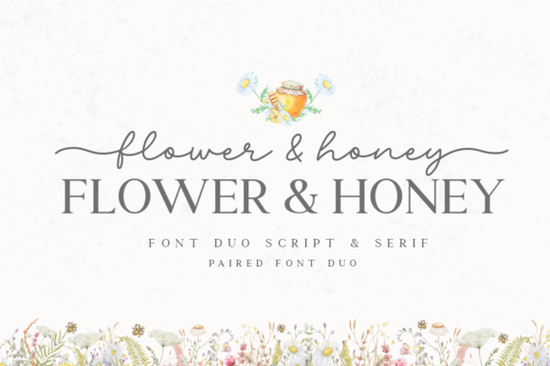
If you have been searching for a typography pairing that feels both warm and professional, the Flower & Honey Font set gives you a reliable starting point. Many crafters and small business owners struggle to match a flowing script with a clean companion typeface. This bundle solves that problem by providing two styles that already share the same baseline rhythm and visual weight. You can download the files and start designing immediately, whether you are making custom stickers, wedding invitations, or print-on-demand apparel.
When working with script typography, consistency matters more than anything else. Designers often waste hours adjusting kerning just to make a heading sit right next to body copy. With a pre-matched pair, your layout comes together quickly. If you want to explore other curated options before committing, you can look into this alternative design resource to compare how different letterforms handle spacing and curve thickness.
How does PUA encoding make editing easier?
The PUA code built into this set changes how quickly you can add decorative elements. Instead of hunting through character maps or copying symbols from outside sources, every swash and alternate glyph sits right inside your standard font panel. This feature works smoothly across major design software like Canva, Silhouette Studio, Cricut Design Space, and Adobe Illustrator. Crafters who run cutting machines will notice fewer broken paths and cleaner cuts when the special characters are properly mapped. Accessibility is the real advantage here, especially when you are working against a tight client deadline.
What projects work best with cheerful script pairings?
Typography that leans into a bright, handcrafted feel performs well across several creative industries. Wedding stationery, bakery packaging, and boutique branding all benefit from a typeface that feels personal without losing readability. Pairing the flowing main script with its simpler supporting face creates natural visual hierarchy. The heavier strokes draw the eye to your headline, while the cleaner secondary text handles dates and pricing. If you prefer a more structured layout, browsing this complementary collection might give you the contrast needed for larger formats. You can also test how Hey Magnolia Font handles similar design contexts.
Can you mix these styles with other decorative elements?
Yes, but restraint keeps your design from feeling cluttered. Script typefaces already carry built-in movement, so adding too many borders or heavy layers usually weakens the final piece. Stick to clean spacing and light color palettes to let the letterforms breathe. Many successful sellers use these fonts on minimalist apparel because the typography handles the visual weight. For a deeper look at balancing decorative and functional text, this industry reference breaks down spacing rules that apply directly to digital storefronts. You can also see how Sometimes Font manages negative space to compare layout approaches.
What file formats will I actually need?
Most modern cutting software accepts OTF and TTF files without requiring extra conversion steps. Always install the desktop versions first, then restart your design program to avoid missing glyph errors. Web projects will need the WOFF files to load quickly on mobile browsers, while print jobs usually run best with SVG or vector exports to maintain crisp edges at any scale. Keeping an organized font folder on your drive prevents the accidental use of outdated style sheets later in the year.
How do you decide which letters to use for branding?
Start by testing your brand name in all caps, title case, and lowercase. Some script fonts look strong in full capitals, while others only shine when written in a mixed-case format. Try placing the font over your actual product photos to see how it reads on screen and on physical materials. If the letterforms disappear against busy textures, switch to a bolder weight or simplify your background. Designers who work with seasonal collections often rotate between different script styles, and checking this paired resource can help you spot combinations that hold up across different marketing channels. You might also review I Heart You Font to evaluate how casual scripts translate to physical packaging.
Quick checklist before you launch your next design:
- Install all style variations and restart your software before opening a new project.
- Test the PUA glyphs in your cutting program to verify path closure and node count.
- Print a physical draft at final scale to check readability from six feet away.
- Save your favorite swash combinations as text presets for faster batch editing.
- Run a color contrast check if your typography sits on pastel or dark backgrounds.
Once your typography matches your product goals, you can start producing mockups and preparing your storefront for the next launch cycle.
Learn More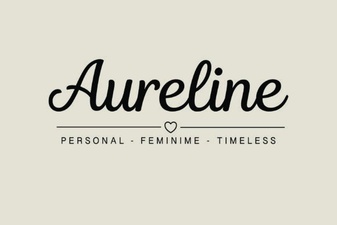 Aureline Font: a Creative and Versatile Typeface
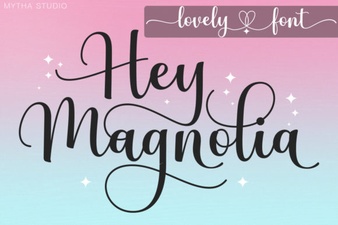 Hey Magnolia Font: Creative Design Examples
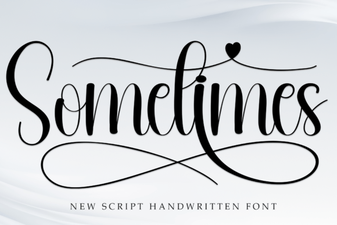 Creative Uses for a Sometimes Font in Design Projects
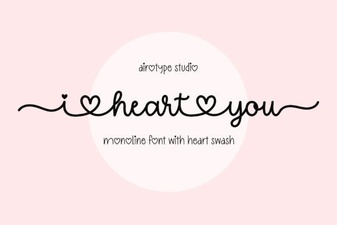 Download Your Favorite I Heart You Font
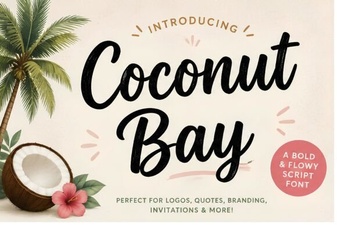 Coconut Bay Font: Tropical Typography for Vibrant Designs
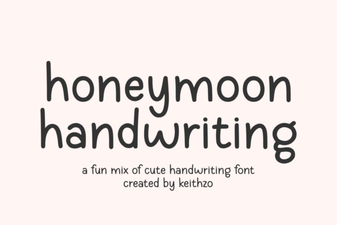 Honeymoon Handwriting Font for Creative Projects