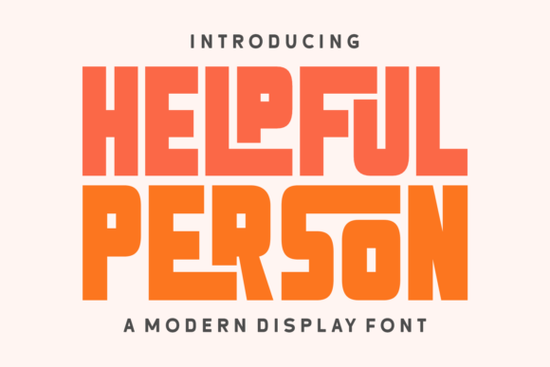
If you are looking for a typeface that brings instant warmth to holiday branding or vintage packaging, the Helpful Person Font delivers exactly what you need. It captures that cozy 1970s aesthetic while keeping layouts clean and readable. Designers and crafters often struggle to find retro letters that do not look overly cartoonish, but this set balances thick block shapes with smooth curves. Whether you run a print-on-demand shop or design event posters, you will notice how quickly it sets a nostalgic tone without sacrificing professionalism.
Why does this 1970s style work for modern branding?
The appeal comes down to structure and spacing. Thick, uniform strokes catch the eye quickly, which matters when people scroll past social media ads or walk past a market booth. Gentle rounding makes the letters approachable instead of aggressive. This works especially well for seasonal campaigns. A Thanksgiving menu or Christmas gift tag needs to feel familiar, and chunky display type reminds people of classic storefronts and old recipe cards. If you usually lean toward weathered typography choices, you will notice this font shares that vintage energy while staying crisp on digital screens.
Who should use this typeface for everyday projects?
This set fits best for creators who need one font to carry a visual identity. Small business owners save time by picking a strong display face that handles visual hierarchy well on its own. Crafters cutting vinyl benefit from the open letterforms, which prevent material bridging during machine cuts. Packaging designers also find it reliable for labels because thick strokes hold up clearly even at smaller sizes. While some search for quirky serif alternatives, this blocky style gives you better control over spacing without overwhelming the page.
Here are common ways creators apply it right now:
- Holiday packaging tags that need a standout header
- Event flyers where the title must grab attention quickly
- Vintage apparel graphics printed on shirts and tote bags
- Editorial layouts for community newsletters or zines
How do you handle ligatures and spacing in software?
Working with display letters requires a quick setup step in your design program. Apps like Illustrator or Canva need PUA encoding turned on to access the full character set. Once enabled, you gain direct entry to alternate glyphs and playful ligatures. This feature removes the need for manual kerning on tight word marks. When building a logo or compact banner, automatic connections keep spacing consistent. If you have tried soft rounded lettering options in the past, you will appreciate how PUA encoding streamlines the workflow. Paste your phrase, check the alternates panel, and pick the combination that fits your layout. The ligatures connect naturally without looking forced.
Where else can you explore similar vintage typography?
Once you lock in a retro direction, test a few variations before finalizing artwork. Pairing a heavy headline with a clean body font creates contrast that guides the reader’s eye through the page. If your project calls for something playful, handwritten brush styles complement thick block letters by adding a personal touch to supporting text. Remember to limit your color palette to three tones when using display typefaces. High contrast between the letters and background prevents visual clutter. You can also browse retro display typefaces like this one to compare stroke weights and letter proportions before committing to a full brand kit.
For a closer look at how these letterforms behave in real design files, check out the Helpful Person Font preview to see the complete glyph set and spacing examples.
Before you start your next design file, run through this quick setup checklist:
- Enable OpenType features in your text panel to reveal hidden ligatures and alternates.
- Set line height to 1.2 so chunky letters do not overlap on multi-line headers.
- Export a test proof at actual print size to verify edge sharpness and cut lines.
- Pair with a neutral sans-serif for body copy to maintain readability at small sizes.
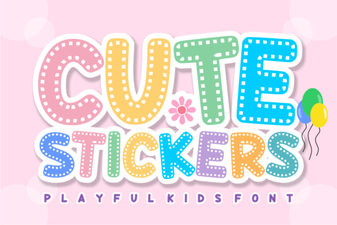 Design Creative Projects with a Cute Stickers Font
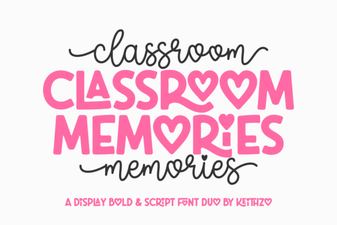 Fonts for Capturing Classroom Memories
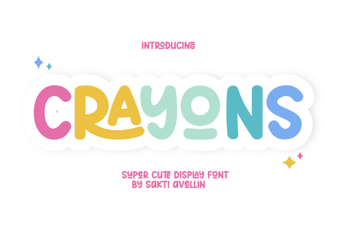 Crayons Fonts for Creative Design Projects
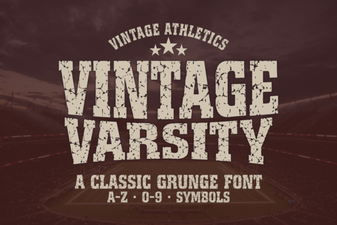 Vintage Varsity Font: Design Ideas & Creative Uses
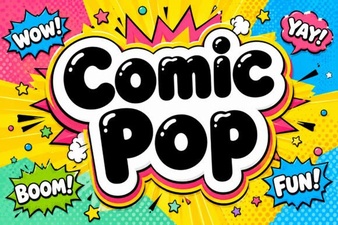 Get Creative with Comic Pop Font Projects
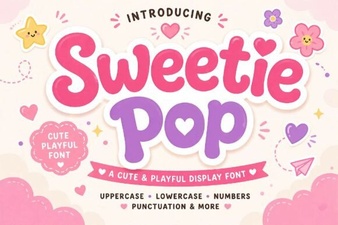 Crafting Delight with Sweetie Pop Font